CAR-T Cell Therapy Antibodies are essential research tools for laboratories involved in chimeric antigen receptor (CAR) T-cell development, functional characterization, and translational immuno-oncology research. These antibodies enable precise phenotyping, activation monitoring, quality control, and mechanistic studies across the CAR-T workflow—from construct design and cell engineering to functional validation and preclinical evaluation.
This in-depth, SEO-optimized educational article explains how antibodies used in CAR-T research support standardized laboratory workflows, highlights best practices for antibody selection, and references authoritative .edu and .gov resources to support scientific rigor and reproducibility.
Scientific background: why antibodies are central to CAR-T research
CAR-T cell therapy relies on genetically modified T lymphocytes expressing a synthetic receptor that recognizes a tumor-associated antigen independently of MHC presentation. Because CAR-T products are complex, living cell populations, antibody-based assays are indispensable for:
-
Cell identity confirmation (T-cell lineage markers)
-
CAR expression verification (anti-CAR or antigen-Fc antibodies)
-
Activation and exhaustion profiling
-
Functional potency assessment
-
Safety and quality research controls
Educational overviews of CAR-T biology and laboratory development pipelines are provided by the National Institutes of Health and the National Cancer Institute:
https://www.cancer.gov/about-cancer/treatment/types/immunotherapy/car-t-cell-therapy
https://www.ncbi.nlm.nih.gov/books/NBK571012/
Key antigen targets analyzed using CAR-T Cell Therapy Antibodies
T-cell lineage and subset markers
Antibodies targeting classical T-cell markers are foundational for CAR-T characterization:
-
CD3, CD4, CD8 – lineage and subset distribution
-
CD45RA / CD45RO – naïve vs memory phenotype
-
CCR7, CD62L – central vs effector memory
Flow cytometry gating strategies are extensively described in academic immunology protocols hosted by NIH and university repositories:
https://www.ncbi.nlm.nih.gov/pmc/articles/PMC6352060/
https://flowrepository.org/
CAR expression detection
CAR expression is commonly detected using:
-
Anti-idiotype antibodies
-
Protein L or antigen-Fc fusion antibodies
-
Tag-specific antibodies (FLAG, Myc, HA)
These tools confirm transduction efficiency and surface expression. Methodological discussions are available via NIH-hosted reviews:
https://www.ncbi.nlm.nih.gov/pmc/articles/PMC7565234/
Activation, exhaustion, and functional state markers
To assess CAR-T activation and durability, laboratories rely on antibodies against:
-
Activation: CD25, CD69, CD71
-
Exhaustion: PD-1, LAG-3, TIM-3, TIGIT
-
Proliferation: Ki-67
NIH and NCI resources provide detailed immunophenotyping guidance:
https://www.ncbi.nlm.nih.gov/pmc/articles/PMC7301173/
https://www.cancer.gov/research/key-initiatives/ras/immune-monitoring
Expanded laboratory applications of CAR-T Cell Therapy Antibodies
1) Flow cytometry and multiparameter immunophenotyping
Flow cytometry is the primary application for CAR-T antibodies, enabling:
-
Quantification of CAR-positive cells
-
Monitoring of differentiation and exhaustion states
-
Lot-to-lot comparability in research manufacturing
Educational cytometry standards and reagent guidance are available from:
https://www.ncbi.nlm.nih.gov/pmc/articles/PMC6782258/
https://www.niaid.nih.gov/research/flow-cytometry-core
2) Functional assays and cytokine profiling
CAR-T activity is often evaluated using antibody-based assays measuring cytokine release:
-
IFN-γ, IL-2, TNF-α – effector function
-
IL-6, GM-CSF – inflammatory response modeling
Cytokine assay frameworks are discussed in NIH-supported publications:
https://www.ncbi.nlm.nih.gov/pmc/articles/PMC6524405/
https://www.niaid.nih.gov/research/cytokines
3) Immunocytochemistry and imaging
Antibodies enable spatial visualization of CAR-T cells interacting with tumor targets in co-culture or tissue models:
-
Anti-CD3 / anti-CD8 for T-cell localization
-
Anti-tumor antigen antibodies for target validation
Immunostaining methodologies are detailed in NIH protocol repositories:
https://www.ncbi.nlm.nih.gov/pmc/articles/PMC7142045/
4) Preclinical safety and quality research
In research and translational settings, antibodies support studies of:
-
Off-target recognition
-
T-cell subset imbalance
-
Persistence and activation kinetics
Regulatory-science background for cellular therapy evaluation is outlined by the U.S. Food and Drug Administration:
https://www.fda.gov/vaccines-blood-biologics/cellular-gene-therapy-products
Antibody formats and selection criteria for CAR-T research
Monoclonal vs polyclonal antibodies
-
Monoclonal antibodies: preferred for flow cytometry and quantitative assays due to specificity and reproducibility
-
Polyclonal antibodies: occasionally used for exploratory detection or imaging
Conjugation options
-
Fluorophore-conjugated antibodies: multiparameter flow cytometry
-
Enzyme-conjugated antibodies (HRP/AP): ELISA and cytokine assays
-
Unconjugated antibodies: flexible use in imaging or secondary-based detection
Validation considerations
-
Reactivity confirmed in human T cells
-
Compatibility with flow cytometry panels
-
Documented clone performance and lot consistency
Flow cytometry antibody validation principles are discussed here:
https://www.ncbi.nlm.nih.gov/pmc/articles/PMC5866821/
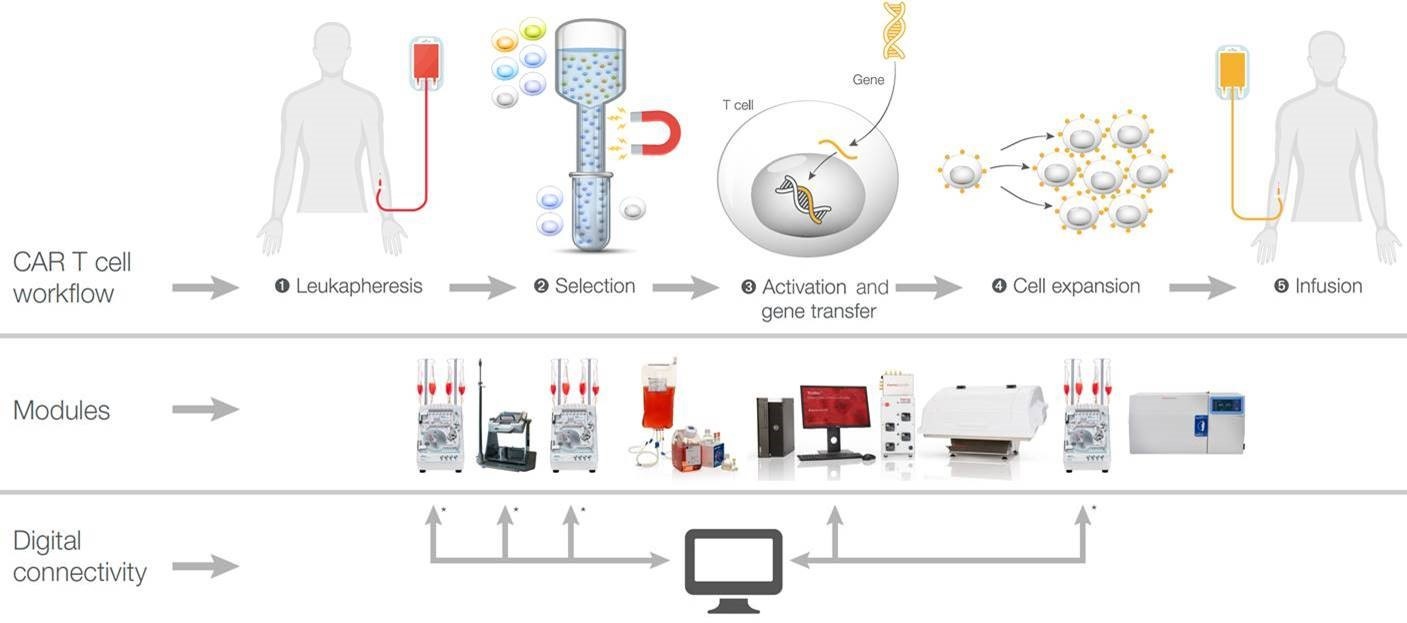
Example CAR-T research workflows enabled by antibodies
CAR-T phenotyping workflow
Transduction → Anti-CAR staining → CD3/CD4/CD8 profiling → Exhaustion marker analysis
Functional evaluation workflow
CAR-T + target co-culture → Cytokine antibody assays → Proliferation and activation analysis
Preclinical modeling workflow
In vitro / in vivo models → Immunostaining and flow cytometry → Persistence and safety profiling
Educational workflow summaries are available via:
https://www.cancer.gov/research/areas/immunotherapy/car-t-cells
High-quality CAR-T Cell Therapy Antibodies support laboratories working in:
-
CAR-T cell engineering and optimization
-
Flow cytometry immunophenotyping
-
Cytokine release and functional assays
-
Immuno-oncology research
-
Preclinical and translational cell therapy studies
-
Quality and comparability research workflows
By integrating validated antibody reagents into standardized assays, research teams achieve higher data confidence, better reproducibility, and clear biological insights throughout CAR-T development pipelines.
Additional authoritative educational resources (.edu / .gov)
-
NIH & NCI CAR-T overviews and protocols:
https://www.cancer.gov/about-cancer/treatment/types/immunotherapy/car-t-cell-therapy
https://www.ncbi.nlm.nih.gov/books/NBK571012/ -
Academic immunology and cytometry resources:
https://www.niaid.nih.gov/research/immune-system
https://www.nature.com/subjects/flow-cytometry -
Regulatory-science and translational context:
https://www.fda.gov/vaccines-blood-biologics/cellular-gene-therapy-products