Gene transfer technologies have become a central focus in biomedical research due to their potential to correct genetic deficiencies at the source. One critical application area is hemophilia B, a condition caused by insufficient production of Coagulation Factor IX (FIX). Among various analytical tools, the Factor IX ELISA assay has proven indispensable for quantifying FIX protein levels in mouse plasma post-gene transfer. This article explores how Coagulation Factor IX ELISA can be used to evaluate outcomes of gene delivery in mouse models, with detailed protocols, validation steps, and application references drawn from trusted research and institutional sources.
Introduction to Coagulation Factor IX and Gene Delivery Models
Coagulation Factor IX is a vitamin K-dependent serine protease essential for the intrinsic pathway of blood coagulation. FIX is synthesized in the liver and circulates in plasma in an inactive form until activated by Factor XIa or Factor VIIa–tissue factor complex, triggering a cascade leading to clot formation. Mouse models that are genetically deficient in FIX (F9–/–) are used to mimic hemophilia B for preclinical gene delivery experiments.
According to NCBI Gene Database, the F9 gene in humans is located on the X chromosome, and over 1,000 mutations have been cataloged. For researchers testing viral vector-based gene transfer, assessing plasma FIX levels over time is a standard measure of vector efficacy. This is achieved through enzyme-linked immunosorbent assay (ELISA) techniques, which provide specificity, sensitivity, and scalability.
Mouse Models for Hemophilia B Research
Rodent models are integral to preclinical evaluation of gene delivery platforms. The Jackson Laboratory (JAX) provides well-characterized FIX knockout mice, widely used in academic and industry research.
Key features of these models:
-
F9tm1Dws strain mimics severe FIX deficiency
-
Susceptible to spontaneous bleeding in high-stress environments
-
Compatible with systemic AAV, LV, and non-viral gene vectors
-
Liver-targeting promoters can be evaluated with ease
Resources from MGI – Mouse Genome Informatics offer curated phenotypic and genotypic data on these models, while the NIH Office of Laboratory Animal Welfare (OLAW) provides best practices for ethical handling.
ELISA Technology for Quantifying FIX in Mouse Plasma
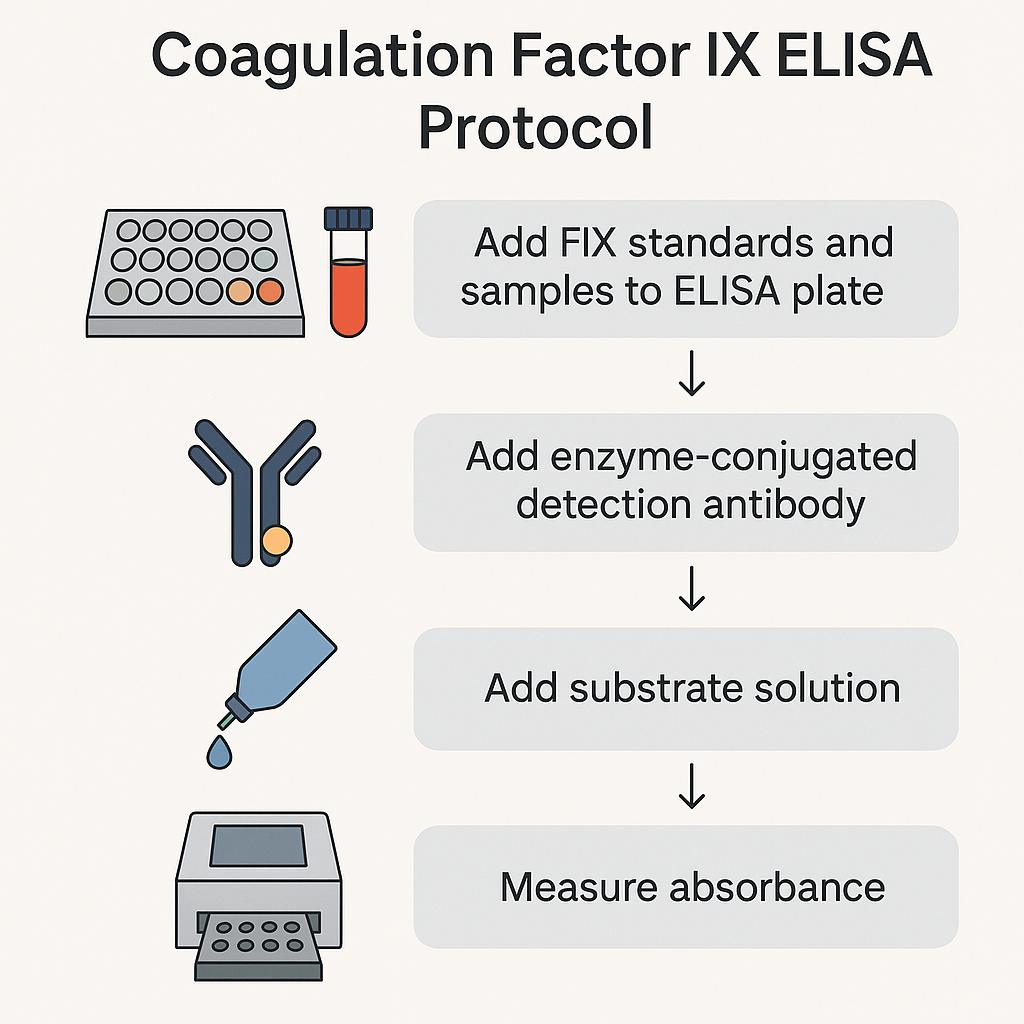
The Factor IX ELISA assay uses the sandwich ELISA format, with a capture antibody targeting FIX and a detection antibody conjugated to an enzyme like HRP (horseradish peroxidase). Upon substrate addition (e.g., TMB), a colorimetric change is measured at 450 nm.
Core components:
-
Pre-coated 96-well plates
-
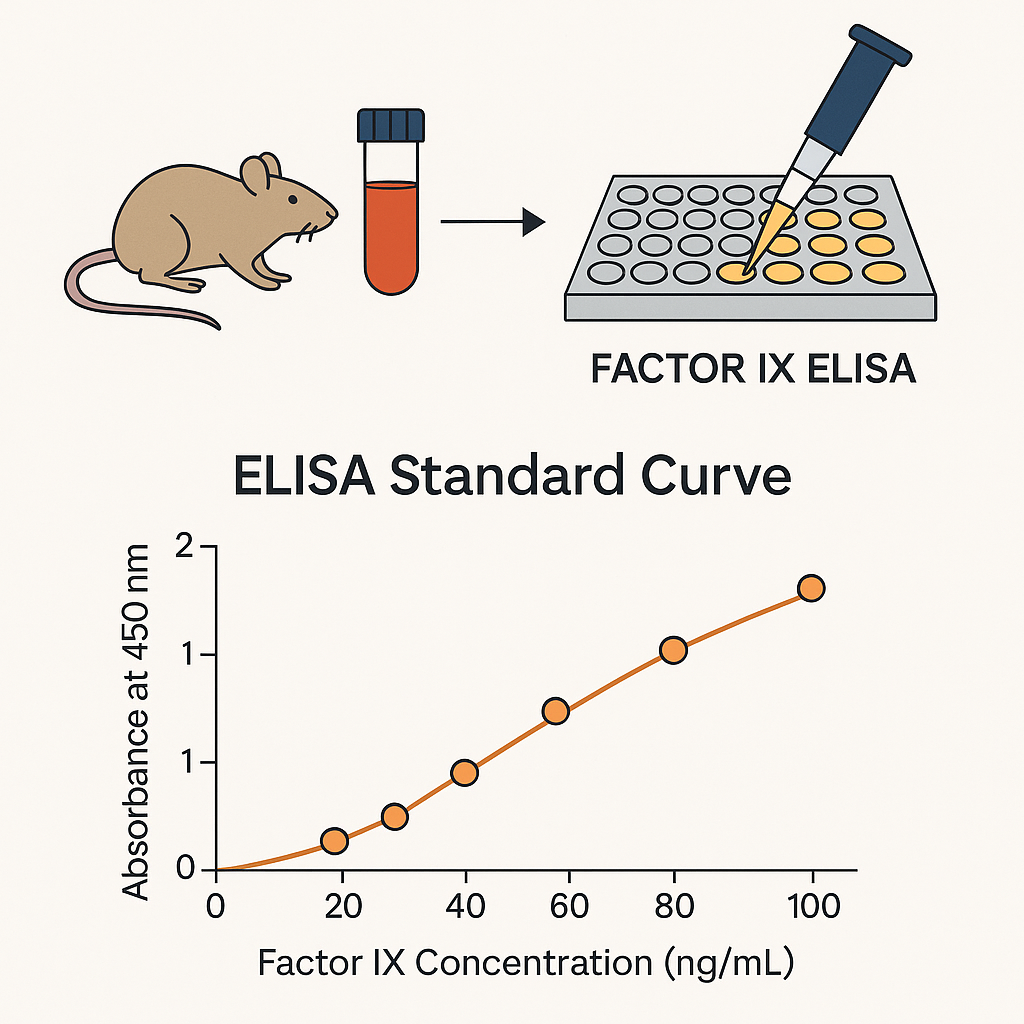
Recombinant FIX standards (range 0–100 ng/mL)
-
High-affinity monoclonal antibodies
-
Wash buffers, stop solution, substrate reagents
The Centers for Disease Control and Prevention (CDC) provides detailed descriptions of ELISA formats and troubleshooting guidelines.
Sample Preparation for FIX Quantification
Mouse plasma is the preferred matrix for FIX ELISA. To prepare consistent and reproducible samples:
-
Collect blood via retro-orbital sinus or submandibular vein
-
Use 3.2% sodium citrate as anticoagulant
-
Centrifuge at 2,000g for 15 min at 4°C within 30 minutes of collection
-
Aliquot plasma and freeze at -80°C
Follow biospecimen handling standards outlined in the NIH Biospecimen Research Database (BRD) to reduce variability.
![AffiELISA® Mouse Coagulation factor IX ELISA [ F9]](https://affigen.com/cdn/shop/files/5BAFG-E4345_5D_20AffiELISA_C2_AE_20Cattle_20IFNg_20Kit_20High-Resolution_20Interferon_20Gamma_20ELISA_20Detection_6becdecc-4de4-42af-a1b8-9caeddaf9156_535x.png?v=1712841158)
Constructing a Standard Curve
Accurate quantification depends on a high-quality standard curve. Researchers should:
-
Prepare at least 8 serial dilutions of recombinant FIX
-
Include zero standard (blank)
-
Fit data with a 4-parameter logistic (4PL) regression model
-
Validate with control samples of known FIX concentrations
The FDA Bioanalytical Method Validation Guidance recommends curve fitting across the full analytical range with accuracy and precision limits within ±15%.
Key Parameters for Evaluating Gene Therapy Outcomes
1. Transgene Expression
Consistent expression of FIX in plasma over 4–12 weeks post-delivery suggests stable integration or episomal persistence of the vector genome. According to NIH RePORTER, AAV vectors with liver-specific promoters (e.g., LP1, HLP) have shown sustained FIX expression in mice.
2. Dose-Response Correlation
ELISA allows plotting FIX expression against vector genome dose, often measured in vector genomes (vg) per mouse. This analysis helps determine the minimum effective dose for therapeutic threshold levels.
3. Comparative Vector Efficacy
Using the same ELISA kit across multiple cohorts, researchers can compare different AAV serotypes (e.g., AAV8 vs AAV5), promoter variants, or codon-optimized constructs.
4. Immunogenicity Profiling
FIX ELISA does not detect neutralizing antibodies, but combining with anti-AAV IgG ELISA or anti-FIX antibody detection provides a complete picture. See resources from Immunology Database and Analysis Portal (ImmPort) for assay protocols.
Assay Validation in Mouse Plasma
Assay validation ensures reproducibility and compliance with regulatory guidelines. Parameters include:
-
Linearity across 5–100 ng/mL FIX
-
LOD/LOQ determination (usually 0.5–1 ng/mL)
-
Intra-assay precision: CV ≤ 10%
-
Inter-assay precision: CV ≤ 15%
-
Recovery and matrix effects from mouse plasma
Refer to the EPA Quality Assurance Technical Guidance for further standardization protocols.
Troubleshooting Low FIX Signals
Occasionally, plasma samples show low or undetectable FIX levels despite successful vector administration. Possible causes include:
-
Degradation of recombinant protein due to improper storage
-
Immunogenic clearance of expressed FIX
-
Incomplete transduction of hepatocytes
-
Interference by hemolysis or lipemia
Cross-reference with gene expression (e.g., qPCR of liver tissue) and coagulation activity assays to confirm.
Advantages of FIX ELISA for Mouse Gene Therapy Studies
| Feature | Benefit |
|---|---|
| High specificity | Distinguishes between mouse and human FIX |
| Sensitivity | Detects <1 ng/mL FIX in plasma |
| Scalability | Suitable for 96- and 384-well formats |
| Cost-effectiveness | Less expensive than clotting activity assays |
| Regulatory acceptance | Validated under FDA and EMA guidelines |
See European Medicines Agency (EMA) documents for further guidance on biomarker qualification in preclinical studies.
Complementary Techniques
While ELISA provides FIX quantity, functionality should also be assessed. Common complementary assays:
-
aPTT (activated partial thromboplastin time)
-
Thrombin generation assay (TGA)
-
Western blotting for FIX protein integrity
-
RT-qPCR for liver mRNA expression
Standard protocols for these assays are available from the National Cancer Institute (NCI) Protocol Repository.
Conclusion
The Coagulation Factor IX ELISA is a validated, reliable, and indispensable technique for quantifying FIX expression in mouse gene therapy models. It serves as a proxy for evaluating transduction success, dose response, and vector performance. Researchers can confidently apply FIX ELISA as part of routine preclinical workflows to screen new constructs, optimize delivery, and guide downstream clinical trial designs.