In the era of global zoonotic spread and increasing avian virus circulation, the detection of H5N1 Influenza A in avian species and associated vectors has prompted enhanced field surveillance capabilities. This article focuses on the implementation and operational value of low-concentration H5N1 PCR positive controls in decentralized or resource-limited testing environments. It also emphasizes the optimization of diagnostic workflows for portable and field-friendly nucleic acid amplification strategies.
Why H5N1 Surveillance Matters in Decentralized Settings
The avian influenza A(H5N1) virus is a highly pathogenic strain that has been documented in wild bird populations and poultry across multiple continents. According to the CDC’s Avian Influenza updates, the virus remains of concern due to its continued evolution and sporadic detection in new territories.
The importance of field-ready diagnostic testing becomes evident in regions lacking centralized infrastructure. The United States Department of Agriculture (USDA) outlines robust surveillance strategies through its APHIS Wildlife Services initiative, which supports localized detection of H5 subtypes.
PCR as the Core Detection Strategy
Polymerase chain reaction (PCR) technology, including real-time RT-PCR, is a cornerstone of Influenza A detection due to its sensitivity, specificity, and rapid turnaround. The National Institutes of Health reports that real-time RT-PCR enables early detection of viral RNA before seroconversion, making it the ideal method for avian virus detection in early infection stages.
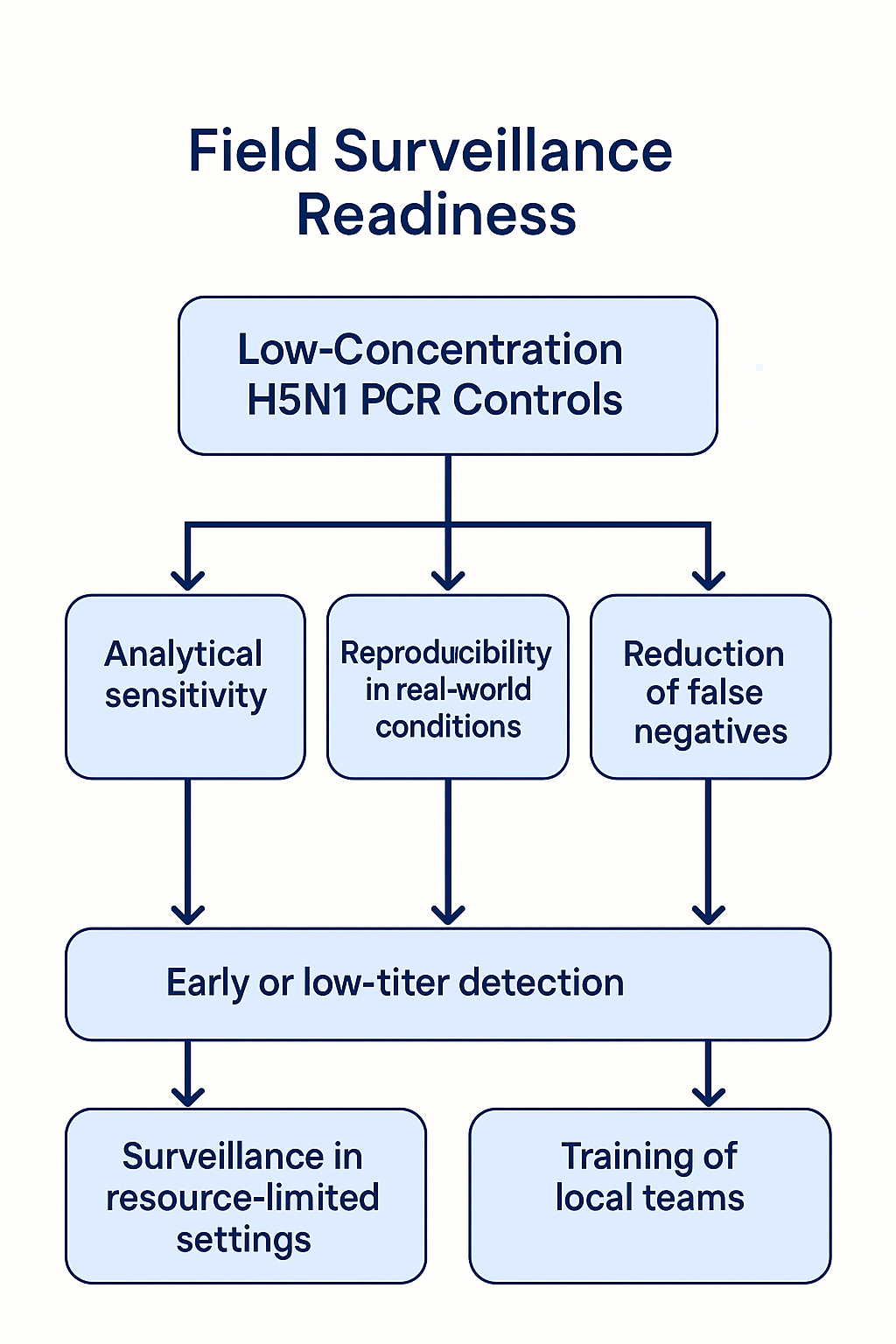
In field applications, the focus shifts to maintaining high analytical accuracy while dealing with sample degradation, environmental variables, and suboptimal laboratory setups. This is where low-concentration PCR controls play an indispensable role.
The Role of Low-Concentration H5N1 PCR Controls
Low-copy RNA positive controls, often lyophilized or cryostabilized, are synthetic materials mimicking the H5N1 target region. They allow validation of:
-
Limit of detection (LOD)
-
Assay robustness in low viral load samples
-
Cold-chain-independent performance
Used in conjunction with portable PCR instruments, such as the Cepheid GeneXpert or Open qPCR, these controls replicate the clinical signal strength observed in early infections or environmental samples.
The CDC’s Division of Scientific Resources supports the preparation of such synthetic RNA materials (cdc.gov/labtools).
Applications in Field-Based Influenza Programs
1. Veterinary Surveillance
Veterinary services in Southeast Asia, Sub-Saharan Africa, and Eastern Europe integrate low-titer H5N1 controls to assess cross-contamination risks and protocol sensitivity. A notable implementation case by the Food and Agriculture Organization (FAO) demonstrated how synthetic RNA standards improved PCR fidelity in rural poultry outbreak investigations.
2. Environmental Swab Testing
Environmental testing through swabbing of bird habitats, shared water sources, and market cages requires consistent internal controls. These controls must resist RNA degradation and remain stable without cryogenic logistics. The WHO’s laboratory manual for influenza virology recommends incorporating synthetic controls in all RT-PCR runs to distinguish environmental inhibition from true negative results.
3. Training and Quality Control
Low-risk RNA mimics enable training of technical staff without requiring biosafety-level containment. The Clinical and Laboratory Standards Institute (CLSI) endorses the use of synthetic controls for competency assessment in decentralized labs.
Technical Parameters of Low-Concentration H5N1 Controls
| Parameter | Typical Value |
|---|---|
| RNA Concentration | 10–100 copies/µL |
| Format | Lyophilized or liquid-stable |
| Storage Condition | Room temperature to -20°C |
| Target Sequence | M gene or HA gene fragments |
| Stability Duration | 6–12 months |
| Matrix | TE Buffer / RNAprotect solution |
According to a report by the European Centre for Disease Prevention and Control (ECDC), HA and M gene primers are the most conserved and reliable for field-ready controls.
Platform Compatibility and Workflow Adaptation
Low-copy controls are compatible with most commercial influenza detection kits, including:
Most of these controls are validated using:
-
Magnetic bead-based extraction systems
-
Low-wattage thermal cyclers
-
Ambient-shipping stabilizers
The National Library of Medicine reports enhanced detection in pooled avian droppings when using diluted positive controls to model trace infections.
Optimization Strategies for Field Laboratories
-
Use of Internal Amplification Controls (IACs) to detect inhibition
-
Rotating freeze-dried standards every 4 weeks
-
Ct Value Monitoring with baseline records for comparison
-
Avoiding high-copy positive controls in multi-use workflows to reduce contamination risk
Field teams are encouraged to follow NIH’s mobile biosurveillance recommendations to harmonize testing procedures.
International Support and Public Resources
Several international health and agricultural institutions provide public resources and downloadable H5N1 diagnostic protocols, including:
Conclusion: Enhancing Readiness Through Synthetic Standardization
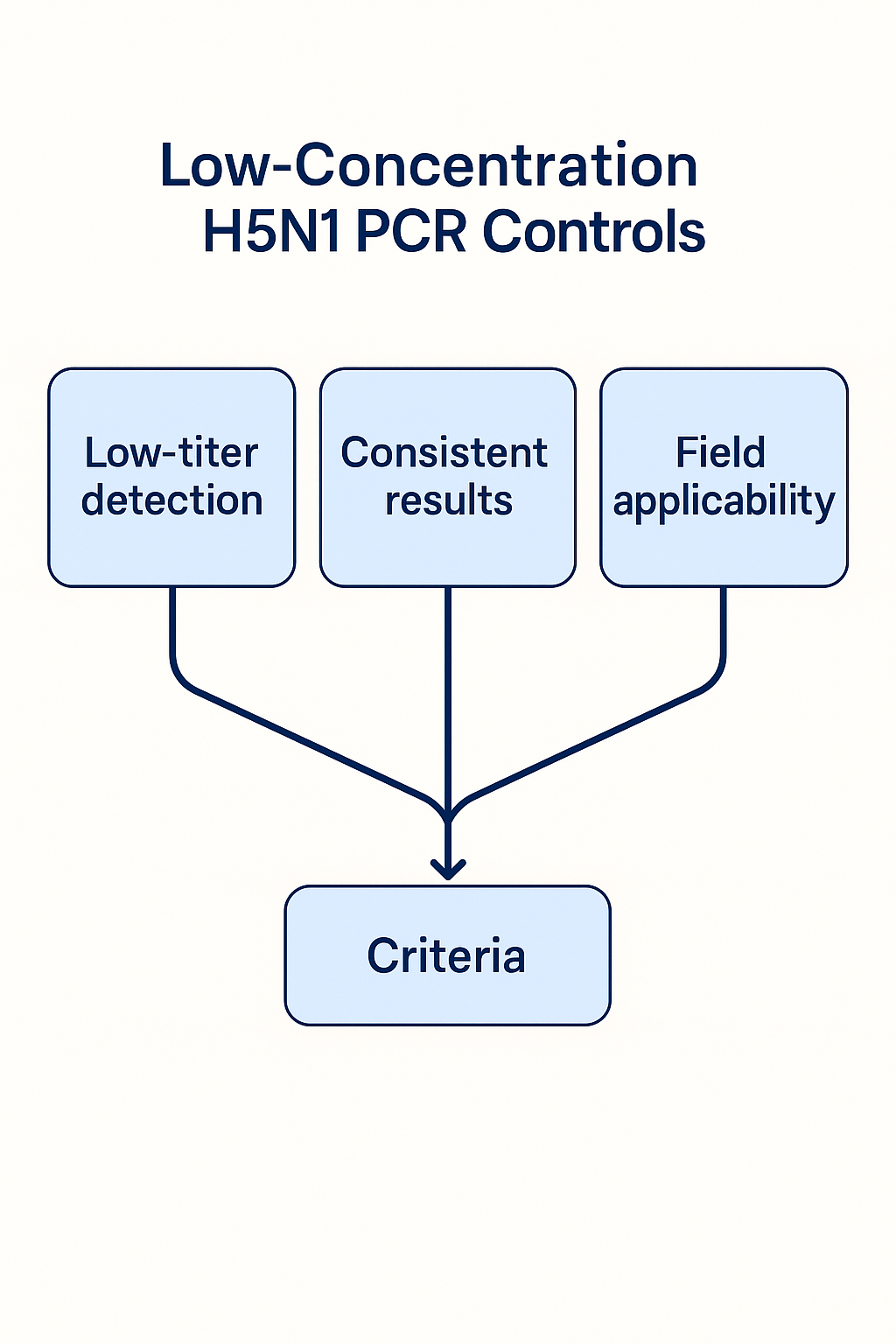
Deploying low-concentration H5N1 PCR controls in rural and semi-urban diagnostic settings is a proven method to strengthen local outbreak detection capabilities. These tools are not merely optional — they are foundational for sustainable field surveillance. As the global scientific community continues to emphasize One Health monitoring, technical standardization with safe and reproducible control materials must remain a top priority.
For optimal impact, these controls must be integrated within routine PCR workflows, adopted across field testing networks, and continually evaluated through external quality assessments (EQAs).