
Introduction
Bacteria of the Clostridium genus play a critical role in microbiology, toxin research, anaerobic bacteriology, and host–pathogen interaction studies. Clostridium antibodies are highly specific immunoreagents developed to recognize antigens derived from Clostridium species, including structural proteins, surface antigens, and secreted toxins. These antibodies enable precise laboratory-based detection, localization, and molecular characterization of Clostridium-associated components.
Their scientific importance is reflected in extensive educational and methodological resources published by leading academic and governmental institutions such as the National Institutes of Health (NIH) (https://www.nih.gov), the National Center for Biotechnology Information (NCBI) (https://www.ncbi.nlm.nih.gov), and the Centers for Disease Control and Prevention (CDC) (https://www.cdc.gov).
This comprehensive, educational article explores the development, validation, and laboratory applications of Clostridium antibodies, with a strong emphasis on experimental workflows and best practices in research laboratories.
Molecular Basis of Antibody Recognition in Clostridium Research
Clostridium antibodies bind to specific epitopes present on bacterial proteins or toxins through high-affinity interactions between antigenic determinants and antibody variable regions. The molecular principles of antibody–antigen recognition are thoroughly described in immunology courses provided by MIT OpenCourseWare (https://ocw.mit.edu) and Harvard Medical School (https://hms.harvard.edu).
Key determinants of antibody performance include:
-
Epitope structure and accessibility
-
Antibody affinity and avidity
-
Antigen purity and conformational integrity
These parameters directly influence assay sensitivity and reproducibility, as discussed in detail within the NCBI Bookshelf (https://www.ncbi.nlm.nih.gov/books).
Target Antigens in Clostridium Antibody Development
Clostridium antibodies are generated against a broad range of biologically relevant antigens, including:
-
Bacterial surface proteins involved in adhesion and colonization
-
Secreted toxins and enzymes central to clostridial pathogenicity
-
Metabolic enzymes characteristic of anaerobic growth
-
Spore-associated proteins relevant to persistence and transmission
Protein annotation databases maintained by NCBI (https://www.ncbi.nlm.nih.gov/protein) and research initiatives funded by the NIH National Institute of Allergy and Infectious Diseases (NIAID) (https://www.niaid.nih.gov) support informed antigen selection for antibody generation.
Core Laboratory Applications of Clostridium Antibodies
1. ELISA and Quantitative Immunoassays
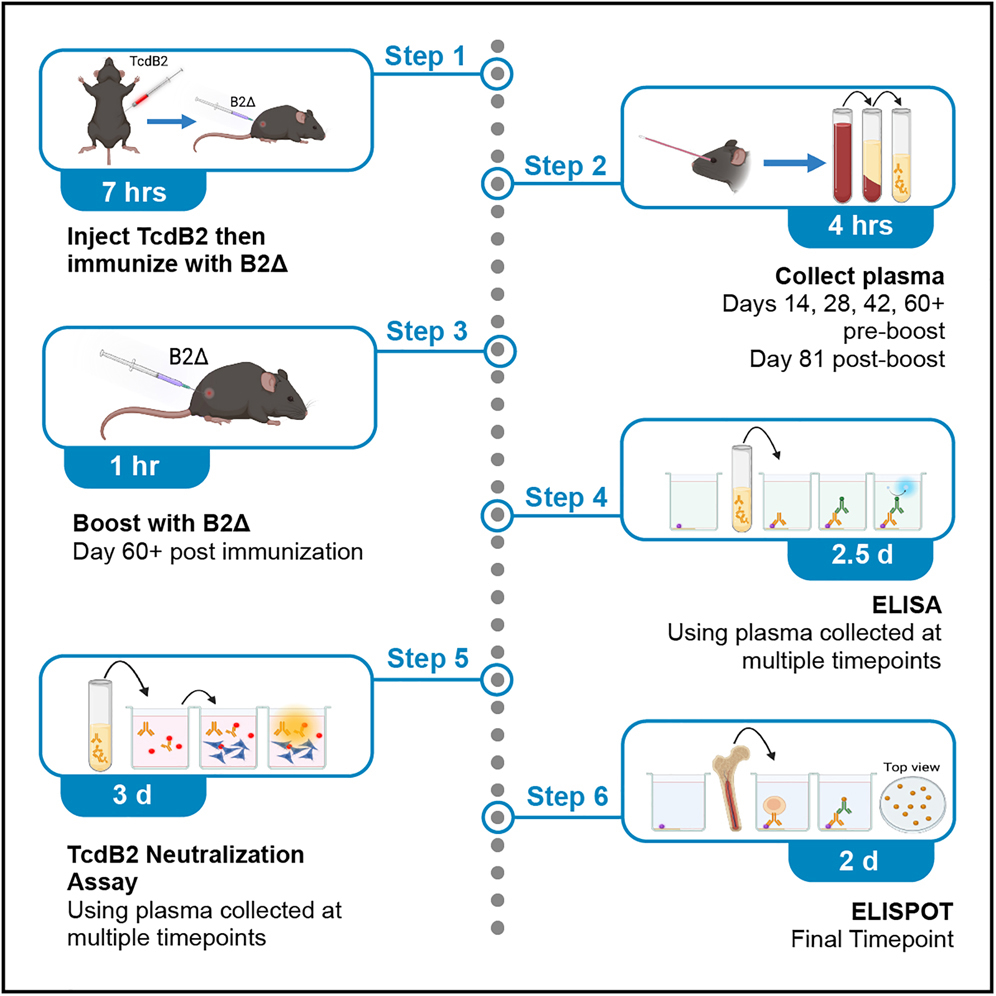
Clostridium antibodies are widely applied in ELISA-based assays to detect and quantify clostridial antigens and toxins with high sensitivity. Detailed immunoassay design guidelines are available through CDC laboratory training programs (https://www.cdc.gov/labtraining) and educational materials hosted by NIH (https://www.nih.gov).
These assays support:
-
Quantification of clostridial toxins
-
Validation of antigen expression
-
Comparative analysis across strains
2. Immunofluorescence and Immunohistochemistry
Using immunofluorescence (IF) and immunohistochemistry (IHC), Clostridium antibodies enable visualization of bacterial antigens in:
-
Cultured cells
-
Tissue sections
-
Experimental infection models
Methodological guidance is available from Yale University School of Medicine (https://medicine.yale.edu), University of California, San Francisco (UCSF) (https://www.ucsf.edu), and the National Cancer Institute (NCI) (https://www.cancer.gov).
3. Western Blotting and Protein Validation
In Western blot analysis, Clostridium antibodies are used to confirm expression and molecular weight of clostridial proteins and toxins. Protocols curated by NIH Protein Resources (https://www.ncbi.nlm.nih.gov/books) and academic laboratories at University of Wisconsin–Madison (https://www.wisc.edu) emphasize specificity and proper experimental controls.
Applications include:
-
Verification of recombinant toxin fragments
-
Detection of processed or degraded proteins
-
Comparative protein expression studies
4. Flow Cytometry and Cellular Analysis
Fluorophore-conjugated Clostridium antibodies are applied in flow cytometry to analyze bacterial association with host cells or antigen expression at the single-cell level. Educational material from the National Human Genome Research Institute (NHGRI) (https://www.genome.gov) and cytometry core facilities at institutions such as Duke University (https://www.duke.edu) illustrate these applications.
5. Immunoprecipitation and Functional Studies
Immunoprecipitation (IP) and co-immunoprecipitation (Co-IP) using Clostridium antibodies enable isolation of clostridial proteins and investigation of molecular interactions. Protocols and theoretical frameworks are accessible via the NCBI Bookshelf (https://www.ncbi.nlm.nih.gov/books) and molecular biology courses from the University of Oxford (https://www.ox.ac.uk).
Antibody Validation and Reproducibility
Reproducibility is a critical component of antibody-based research. The NIH Antibody Validation Initiative (https://www.nih.gov/research-training/rigor-reproducibility/antibody-validation) recommends:
-
Application-specific validation
-
Use of positive and negative controls
-
Orthogonal validation approaches
Additional guidance from the National Academies of Sciences (https://www.nationalacademies.org) highlights the importance of transparent documentation and batch consistency.
Experimental Controls and Best Practices
Best practices outlined by the CDC (https://www.cdc.gov) and the World Health Organization (WHO) (https://www.who.int) recommend implementing:
-
Isotype controls
-
Secondary antibody-only controls
-
Defined antigen standards
Proper antibody storage, dilution optimization, and handling procedures are further detailed in laboratory safety resources from universities such as the University of Michigan (https://www.umich.edu).
Role in Academic Research and Laboratory Surveillance
Clostridium antibodies support a wide range of laboratory-based research activities, including:
-
Fundamental anaerobic bacteriology
-
Toxin biology and protein characterization
-
Comparative strain analysis
-
Method development and assay validation
Global laboratory perspectives are provided by educational resources from the Food and Drug Administration (FDA) (https://www.fda.gov) and the World Health Organization (WHO) (https://www.who.int).
Conclusion
Clostridium antibodies are indispensable tools for modern microbiology and toxin research laboratories. Their application across ELISA, immunofluorescence, Western blotting, flow cytometry, and immunoprecipitation enables precise molecular analysis of clostridial antigens and proteins.
When carefully selected and validated according to best practices established by leading academic and governmental institutions, Clostridium antibodies support robust, reproducible research and contribute significantly to advancing scientific understanding of clostridial biology.
Clostridium antibodies, clostridial antigen antibodies, Clostridium toxin antibodies, ELISA Clostridium antibodies, immunofluorescence Clostridium detection, Western blot Clostridium proteins, flow cytometry Clostridium markers, laboratory Clostridium research reagents, antibody-based clostridial analysis