The Tri-Color Low Range Protein Marker (2.7–40 kDa) is an essential reagent for precise molecular weight determination and efficient monitoring of protein electrophoresis. This marker is designed with multicolored proteins for accurate identification of bands, enhancing experimental reproducibility and data interpretation. It is ideal for applications in molecular biology, biotechnology, and biochemistry research.
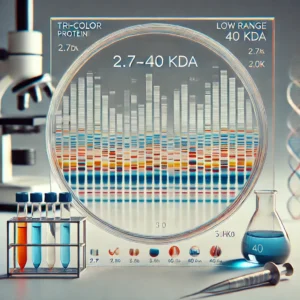
Key Features of the Tri-Color Low Range Protein Marker
- Broad Applicability: Suitable for SDS-PAGE, western blotting, and other protein analysis techniques.
- Color Coding: Multicolored bands allow quick and easy band identification during electrophoresis.
- High Accuracy: Covers the low molecular weight range (2.7–40 kDa) with precise size calibration.
- Ready-to-Use Format: Eliminates the need for preparation, reducing potential errors in experimental workflows.
For more information on the fundamental principles of protein electrophoresis, refer to NIH resources and guidelines from the National Institute of Standards and Technology (NIST).
Applications in Research
The Tri-Color Low Range Protein Marker is widely used across various disciplines, including:
- Protein Purification and Analysis
This marker is crucial in confirming the success of protein purification processes. Educational institutions like Harvard University emphasize its role in molecular biology laboratories. - Validation in Western Blotting
Accurate molecular weight determination in western blotting is critical for identifying specific proteins. Studies supported by the National Science Foundation (NSF) demonstrate the importance of robust protein markers in biomedical research. - Enzyme Studies and Structural Biology
The marker assists in identifying enzyme subunits and other small proteins, as outlined in publications from Stanford University and the University of California, Berkeley. - Educational and Training Labs
Many academic programs utilize these markers for training future scientists. Guidelines from the Centers for Disease Control and Prevention (CDC) highlight the value of accurate protein markers in molecular training labs.
How It Works
The Tri-Color Low Range Protein Marker contains pre-stained proteins that separate based on molecular weight during electrophoresis. Detailed protocols for SDS-PAGE and marker usage are available through PubMed and the FDA’s research guidelines.
- Protein Size Calibration: Markers of known molecular weights serve as a reference to estimate the sizes of unknown proteins.
- Tricolor Visualization: The distinct colors of the bands facilitate precise identification during gel electrophoresis.
The utility of this marker is further discussed in research from the University of Illinois and MIT.
Compliance with Standards
The Tri-Color Low Range Protein Marker is manufactured in compliance with international quality standards:
- WHO Guidelines for protein analysis in clinical and research settings.
- Recommendations from the U.S. Department of Agriculture (USDA) for food and agricultural protein studies.
- Protocols by the Environmental Protection Agency (EPA) for environmental proteomics.
Conclusion
The Tri-Color Low Range Protein Marker (2.7–40 kDa) is an indispensable tool for modern protein research, providing unparalleled precision and ease of use. By adhering to stringent quality and regulatory standards, this marker facilitates cutting-edge discoveries in biochemistry and molecular biology.
For further insights into its applications, visit resources such as Johns Hopkins University, Yale University, and NIH’s molecular biology portals.